Celebrating Academic Excellence: Rizvi Nahar...
08 October 2026

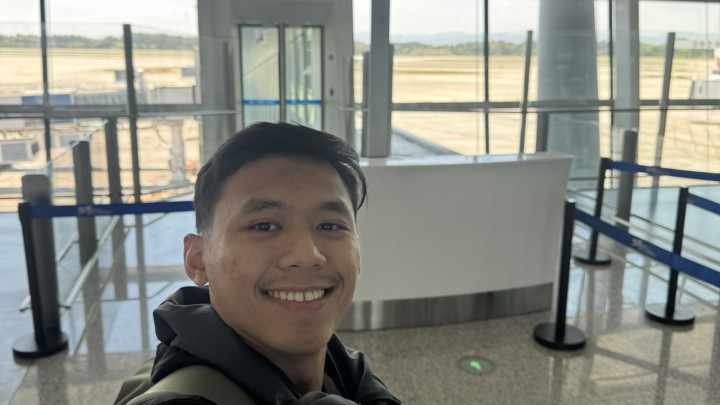
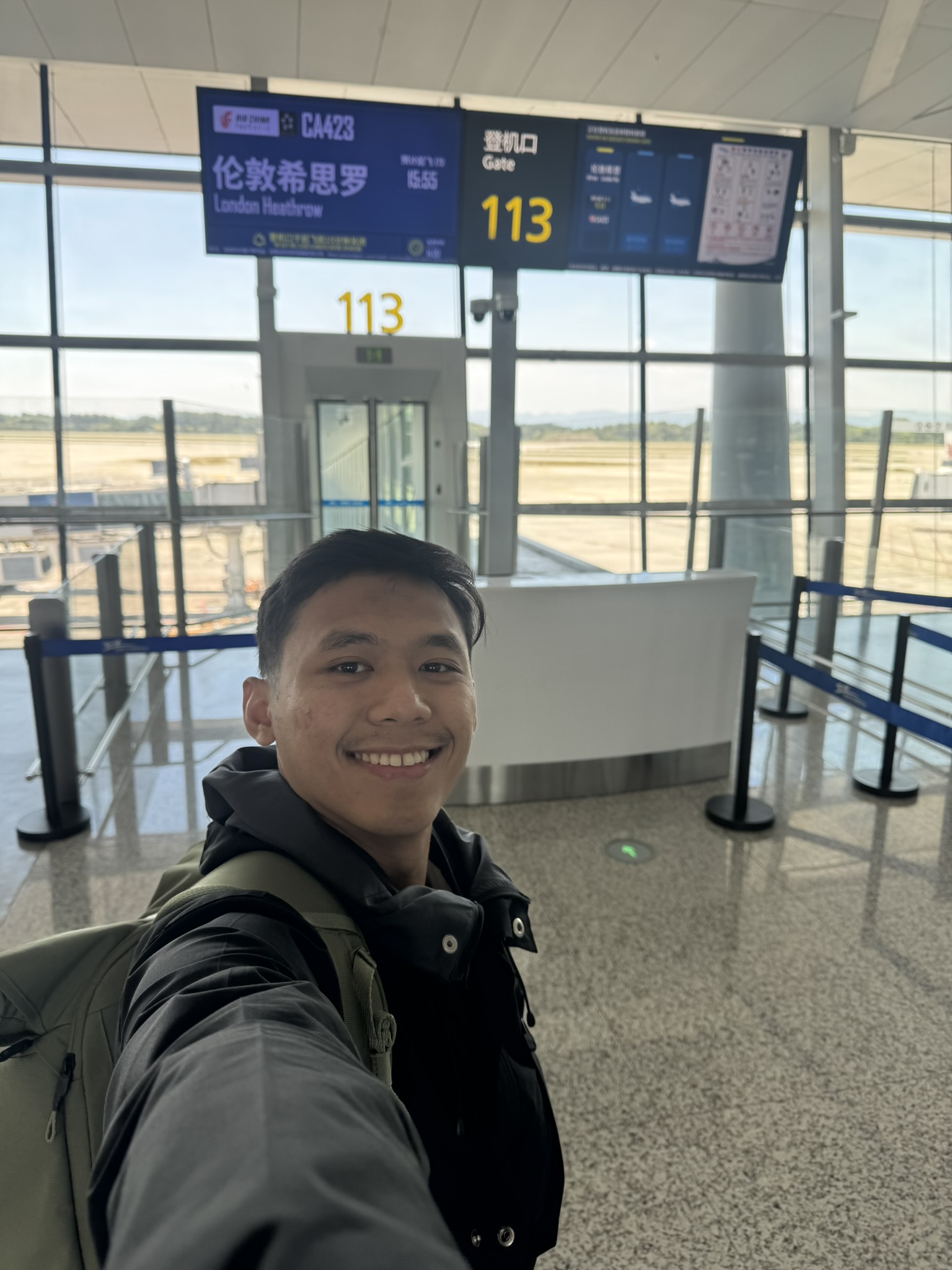
I landed in London as an Arryman Scholar at the end of July with two suitcases and a rough idea of what the coming year would look like. Two months later, after finishing the pre-sessional course at SOAS, I understood the city much better. London didn't get simpler. I got used to it.
Finding a Community in a New City
The first weeks disappeared into admin: opening a bank account, registering with a GP, working out which bus actually went where. None of that made London feel like home. People did. A few weeks after arriving, I saw a flyer near my accommodation and joined a local running community. I'd been running for years, so the activity itself was familiar even when the city wasn't. It also helped me build friendships outside my academic circle. I met people from backgrounds I'd never have encountered in a classroom and talked to them in a way that classrooms rarely allow.
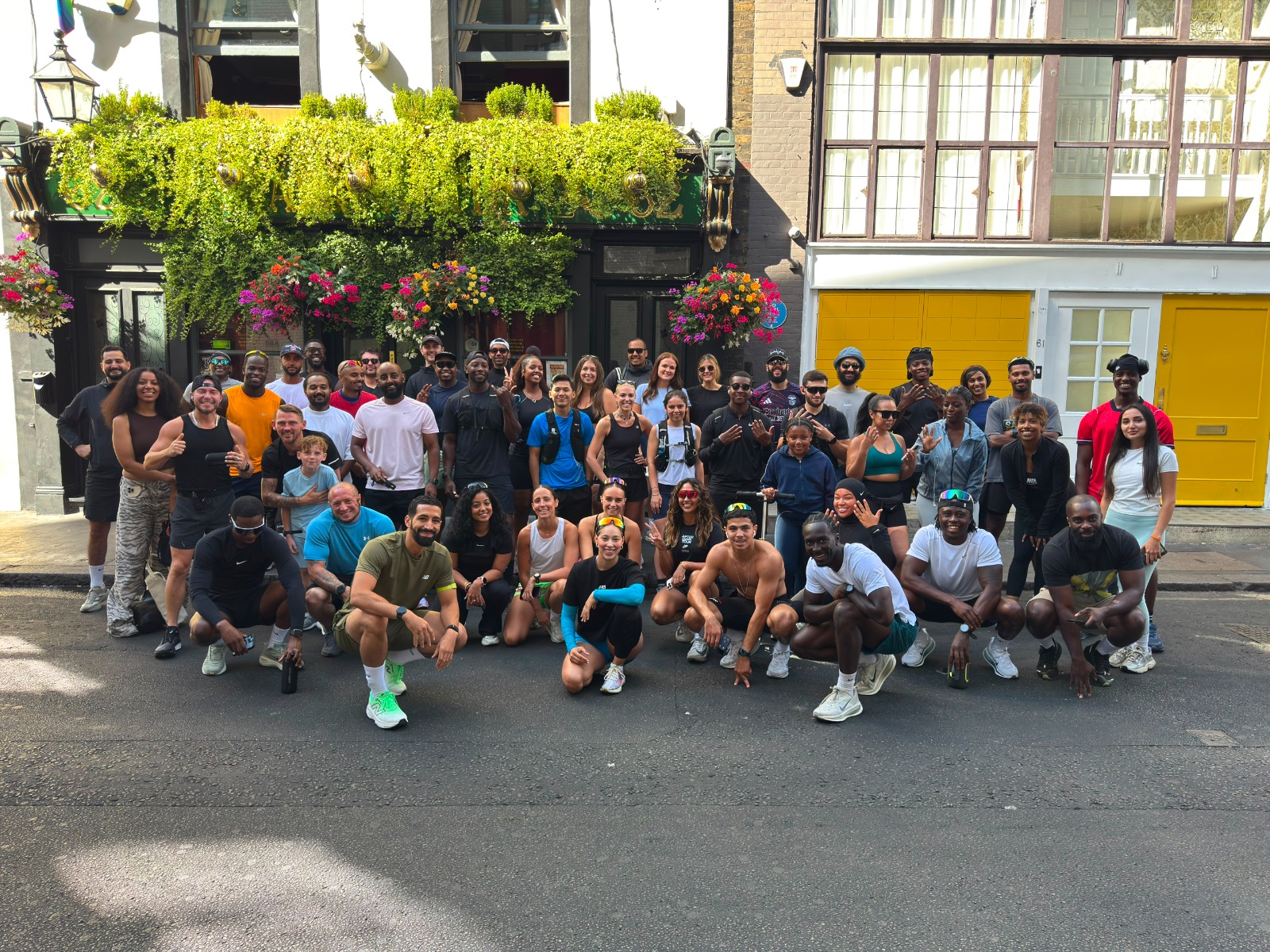
Adapting to a new city doesn't require understanding all of it at once. Often it starts with one familiar thing, and you build outward from there.
An Unexpected Lesson
Not everything about settling in went well. One evening near Regent's Square Park, two people approached me and asked me to follow an Instagram account. While I was distracted, someone else came up from behind and took my phone.
The theft itself lasted seconds. The aftermath took the whole evening: locking down my bank accounts, financial apps, and social media, then working with my mobile provider and bank to secure everything tied to the device. Losing the phone wasn't really about the phone. It was about losing access, all at once, to maps, two-factor authentication, and any easy way to reach anyone.
I've since changed how I carry my phone in crowded places and how much I trust an ordinary-looking street. More than that, I learned to have a digital security plan before I need one: knowing how to remotely lock a device, keeping account recovery details somewhere accessible, and having a backup way to reach essential services.
There was also a more personal lesson. When something unexpected happens in a new country, it is easy to feel overwhelmed. Yet the people around me—including strangers who stopped to help and friends who supported me afterwards—reminded me that I was not alone. The incident was difficult, but it also became part of my process of becoming more independent and resilient in a new environment. It was an expensive lesson, but not one I regret learning early.
Preparing for Graduate Study Through the Pre-Sessional Programme
Alongside adapting to London, my first two months were also focused on preparing academically for my MSc in Economic Policy at SOAS.
I initially viewed the pre-sessional programme primarily as preparation for studying in an English-speaking academic environment. However, the experience became much more than that. The programme allowed me to sharpen the academic skills that I will need throughout my postgraduate studies, particularly academic writing, critical reading, argument development, referencing, presentations, and academic discussion.
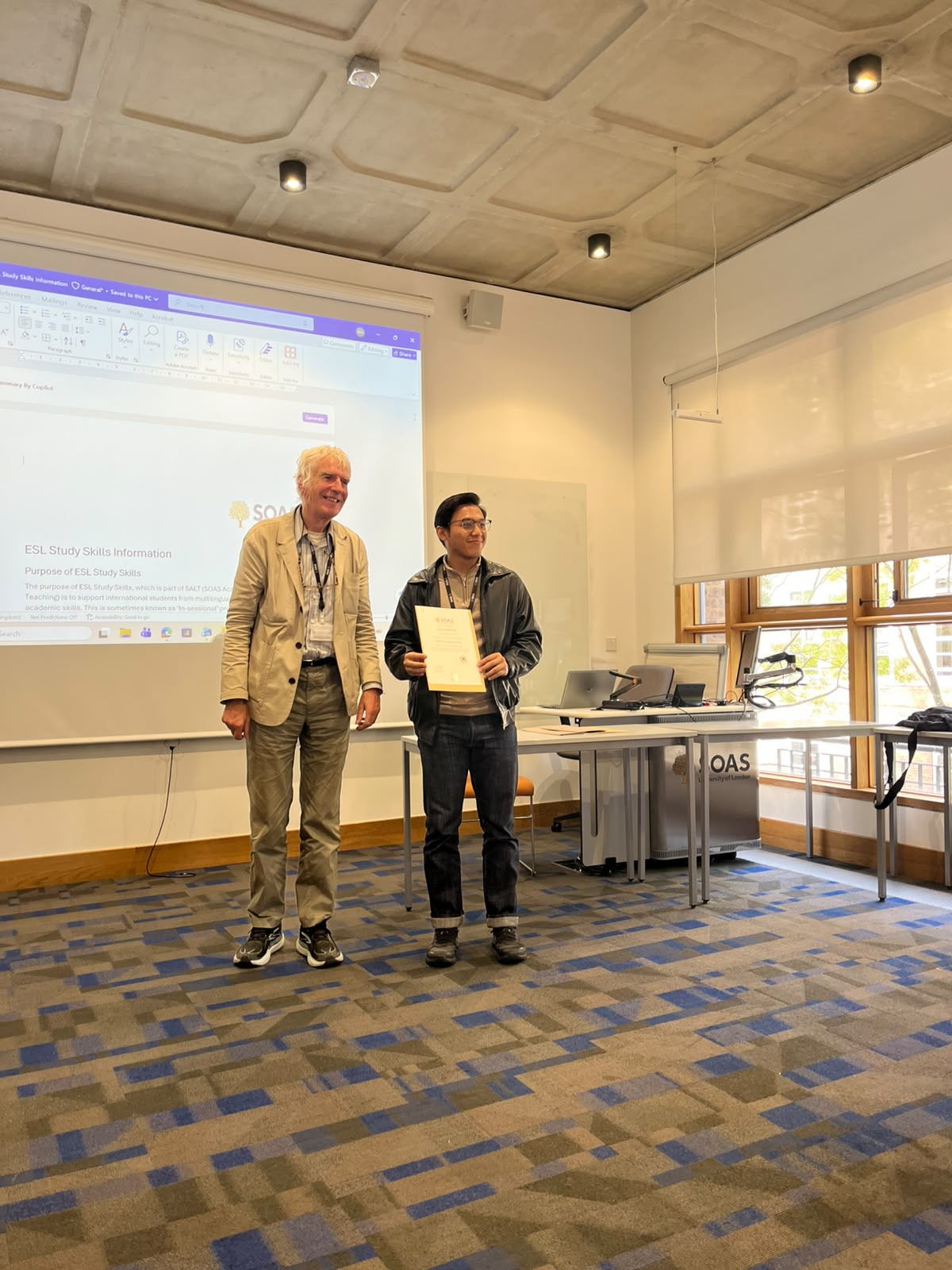
The most useful part was learning to build an argument methodically. Instead of just presenting information, we identified a research question, developed a position, weighed alternative views, and backed our claims with appropriate evidence. The course pushed me to read critically instead of just comprehending text, to support arguments with real evidence, and to write with the precision graduate economics demands: hedging claims where appropriate, giving each paragraph a single controlling idea, and using sources to build an argument rather than decorate one.
The programme's discussion format mattered too. Presenting ideas clearly while engaging with views different from my own reminded me that research isn't only about sound analysis. It's also about communicating that analysis and taking other interpretations seriously.
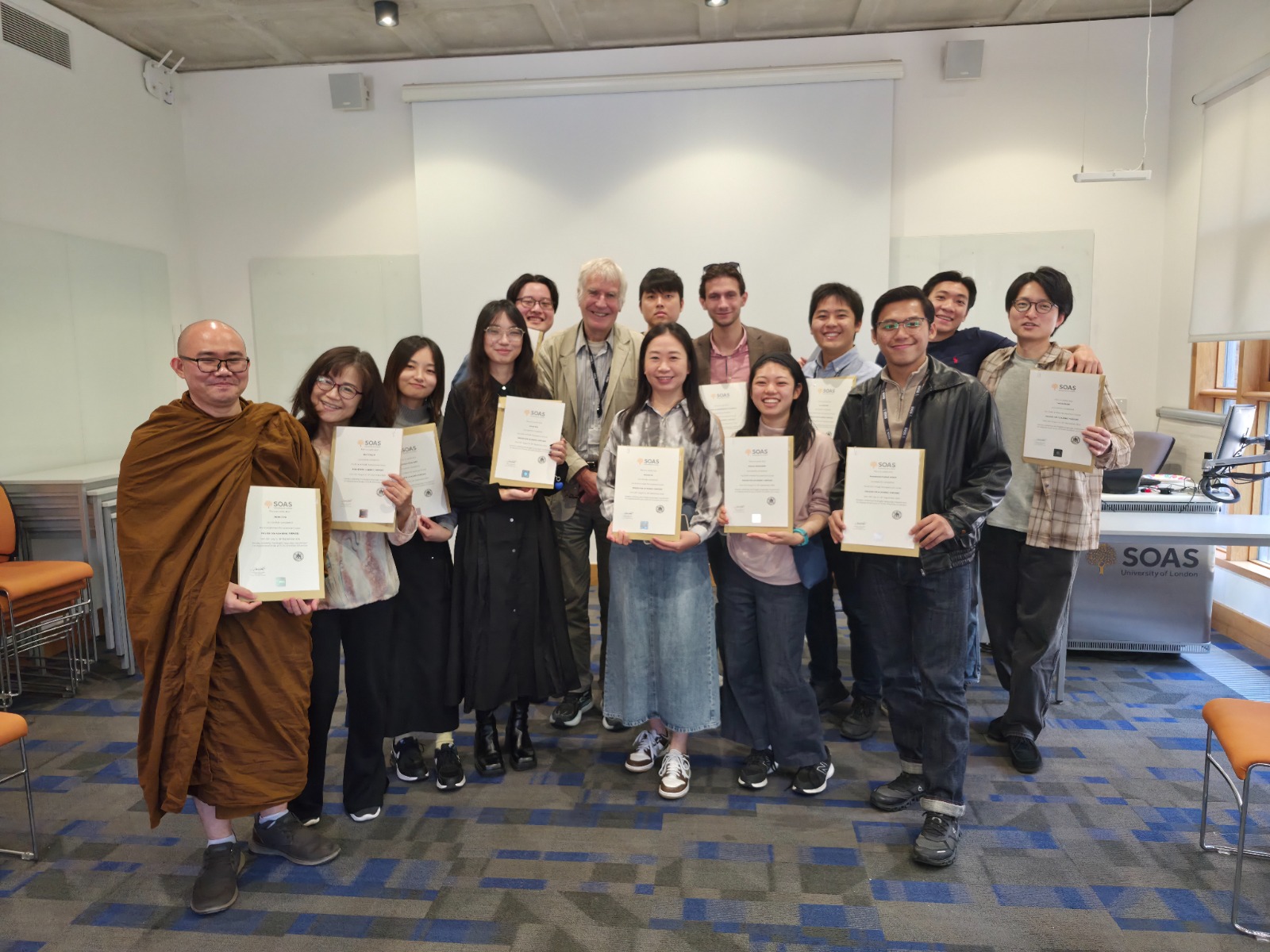
Most valuably, the programme let me meet students from different academic and cultural backgrounds before the MSc even started. Those friendships and academic connections made London feel less foreign and more like a place I was starting to build a life in.
Meeting Professor Jeffrey Wooldridge at the UK Stata Conference
Another memorable academic experience during my first two months was attending the 2026 UK Stata Conference in London on 3–4 September. The conference brought together researchers and practitioners who use Stata for statistical and econometric analysis.
For me, one moment stood out in particular: meeting Professor Jeffrey M. Wooldridge. He is one of the most influential econometricians of the past three decades—the field that combines economic theory, mathematics, and statistical methods to study economic relationships using data. He is a University Distinguished Professor of Economics at Michigan State University and is widely known for his contributions to econometric methods, as well as for his influential textbooks, including Introductory Econometrics: A Modern Approach and Econometric Analysis of Cross Section and Panel Data.
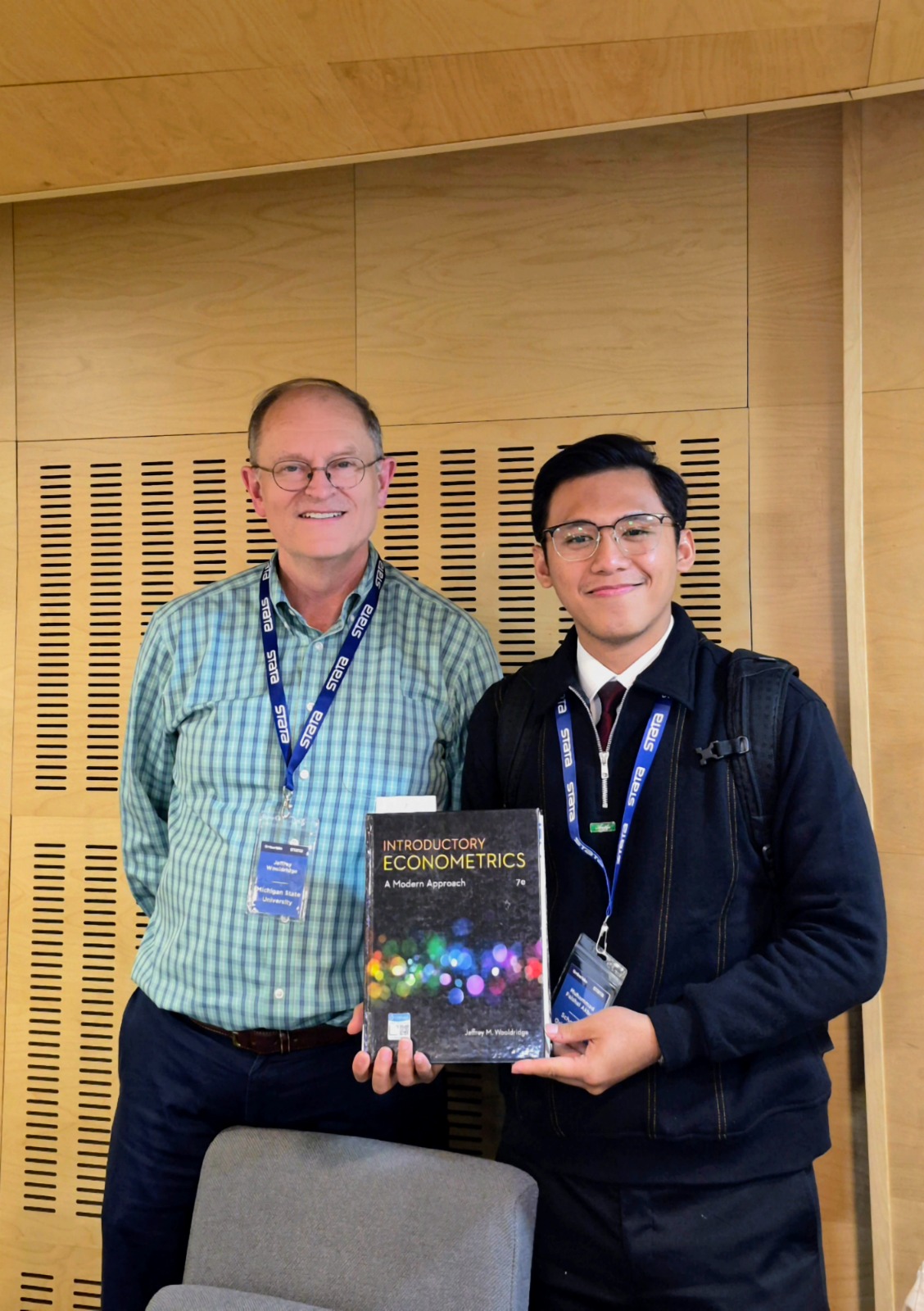
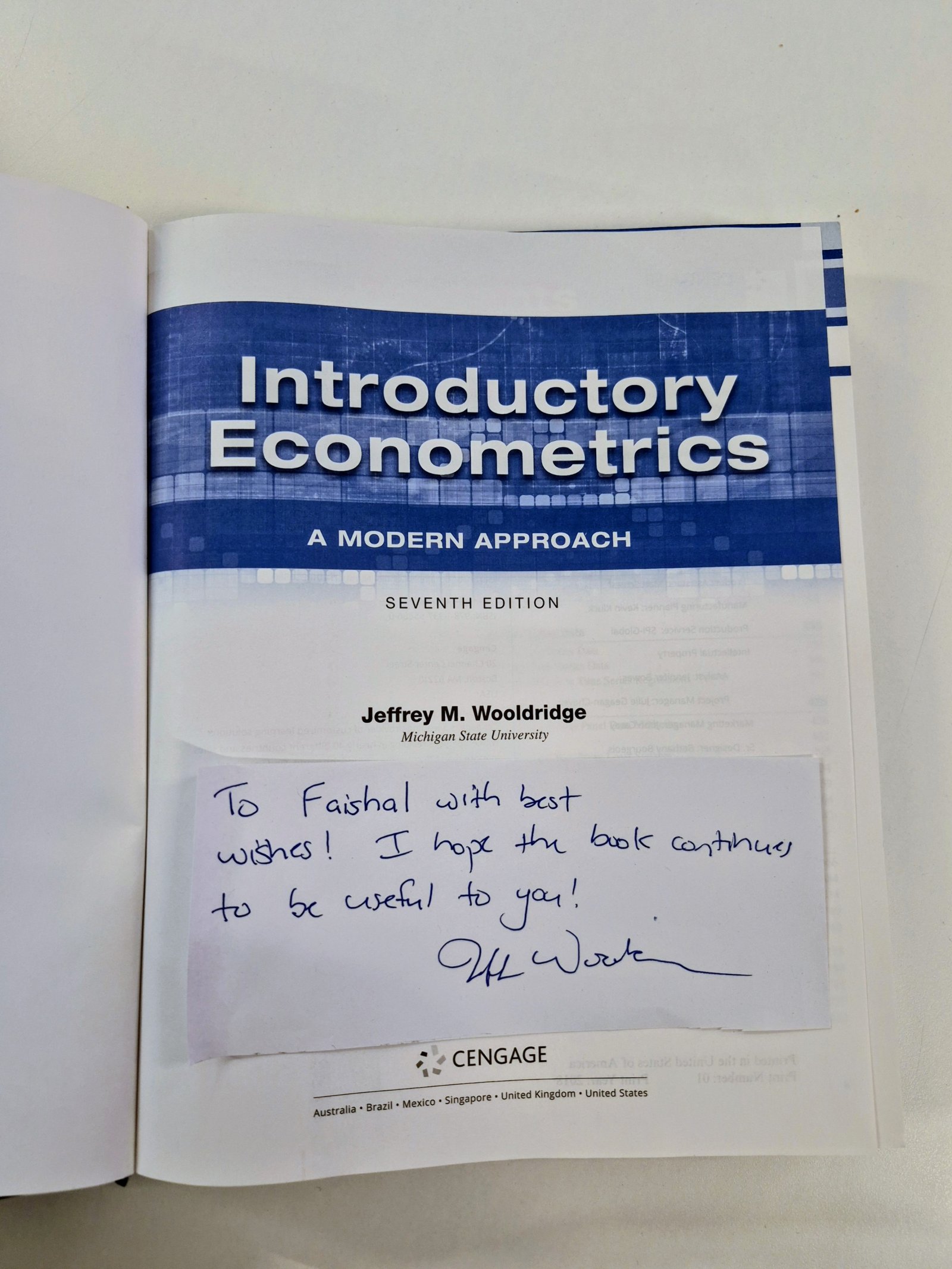
I used his textbook as an undergraduate, so meeting him mattered to me beyond his reputation. His work had shaped how I think about empirical economic analysis long before I met him in person. I also introduced him to the Arryman Scholarship and explained its mission of supporting Indonesian scholars in advanced study and research. It was a brief conversation, but it meant something to represent the programme that brought me to London while meeting someone whose work had shaped my own academic development. The conference also reinforced something I want to carry into my MSc: connecting rigorous empirical methods to policy questions that matter for Indonesia.
From Dinwiddy House to Paul Robeson House
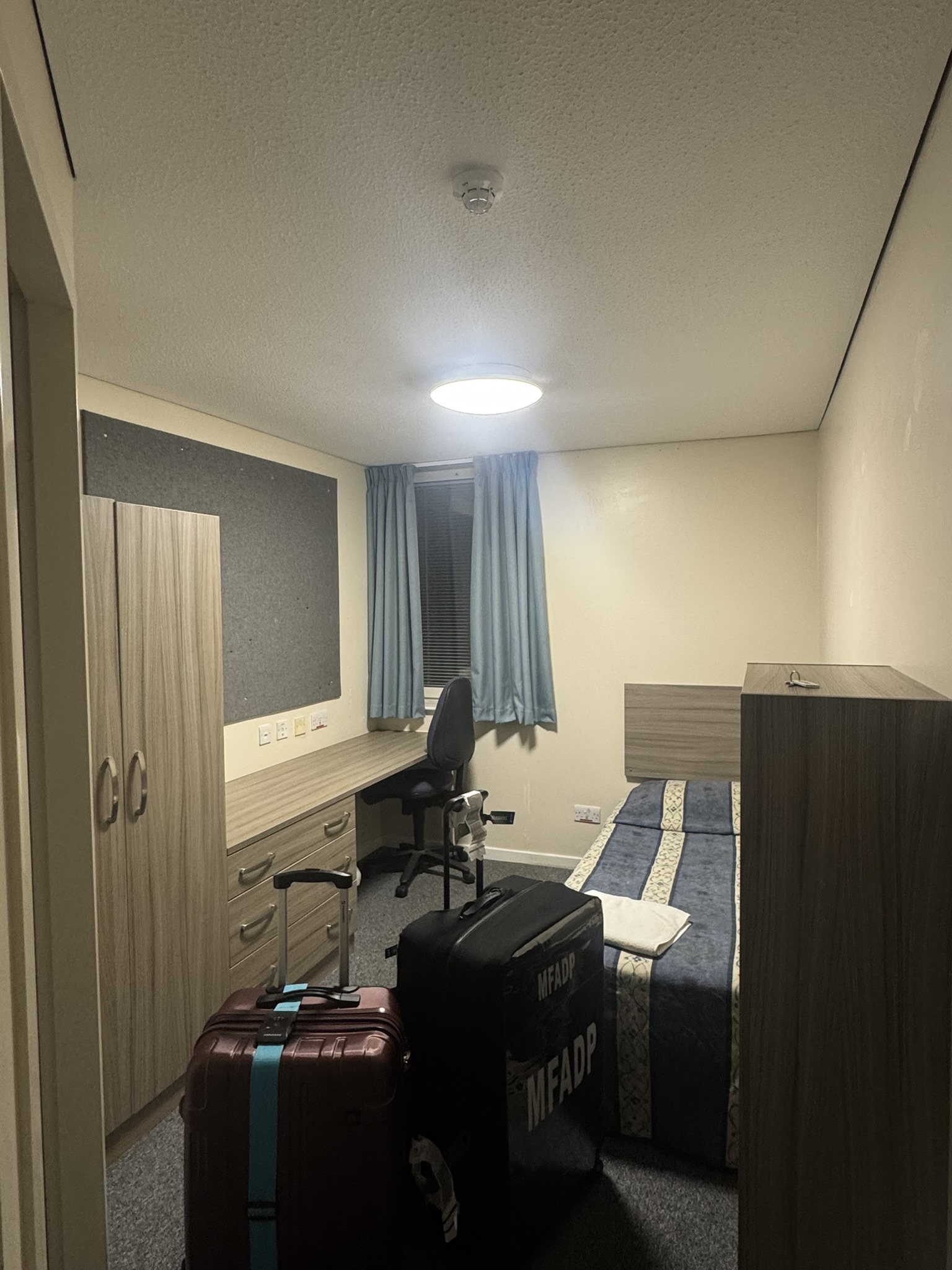
My first two months also marked a transition in my everyday life in London. I initially stayed at Dinwiddy House, which provided me with a convenient base while I completed the pre-sessional programme. As the main academic year approached, I moved to Paul Robeson House, where I will stay during my MSc.
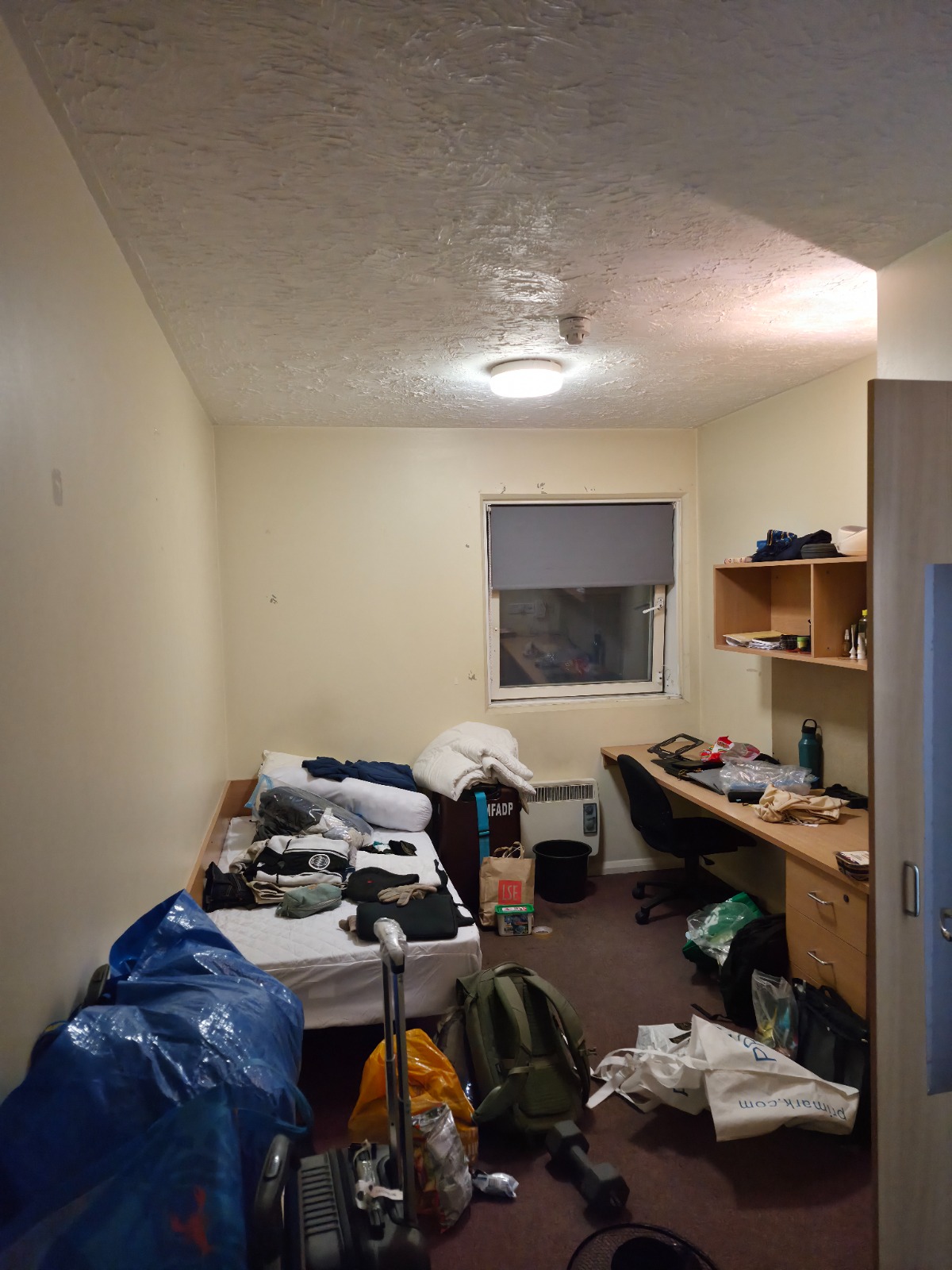
Moving accommodation may seem like a small part of the overall journey, but for me it represented another step towards settling into life in London. I had to organise my belongings, move between residences, and establish a new routine while preparing to begin my degree. It was also another reminder of how quickly these first two months had passed.
When I arrived in London, I was still learning how to navigate the city. Now, I have a new home, a growing network of friends, familiar routes around the city, and a clearer understanding of what lies ahead academically.
Looking Ahead
Two months in, London has stopped feeling foreign and started feeling like the place I currently live — which is, I think, the most honest marker of progress available. Between the running community, the pre-sessional course, an unplanned lesson in vigilance, and a conversation with one of the field's leading econometricians, these first two months gave me more to build on than I expected. The MSc proper starts now, and I'm glad to be starting it from steadier ground.
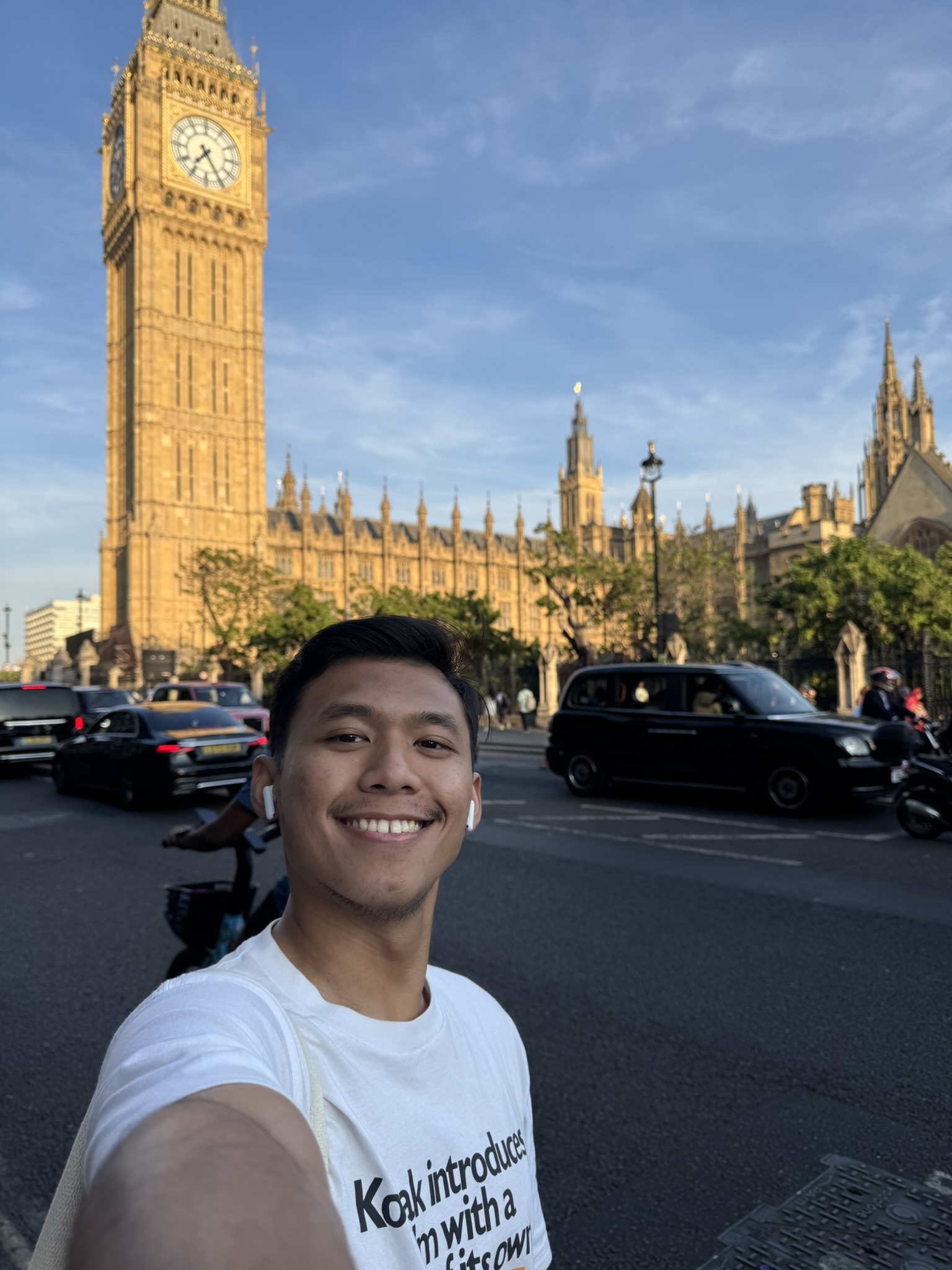
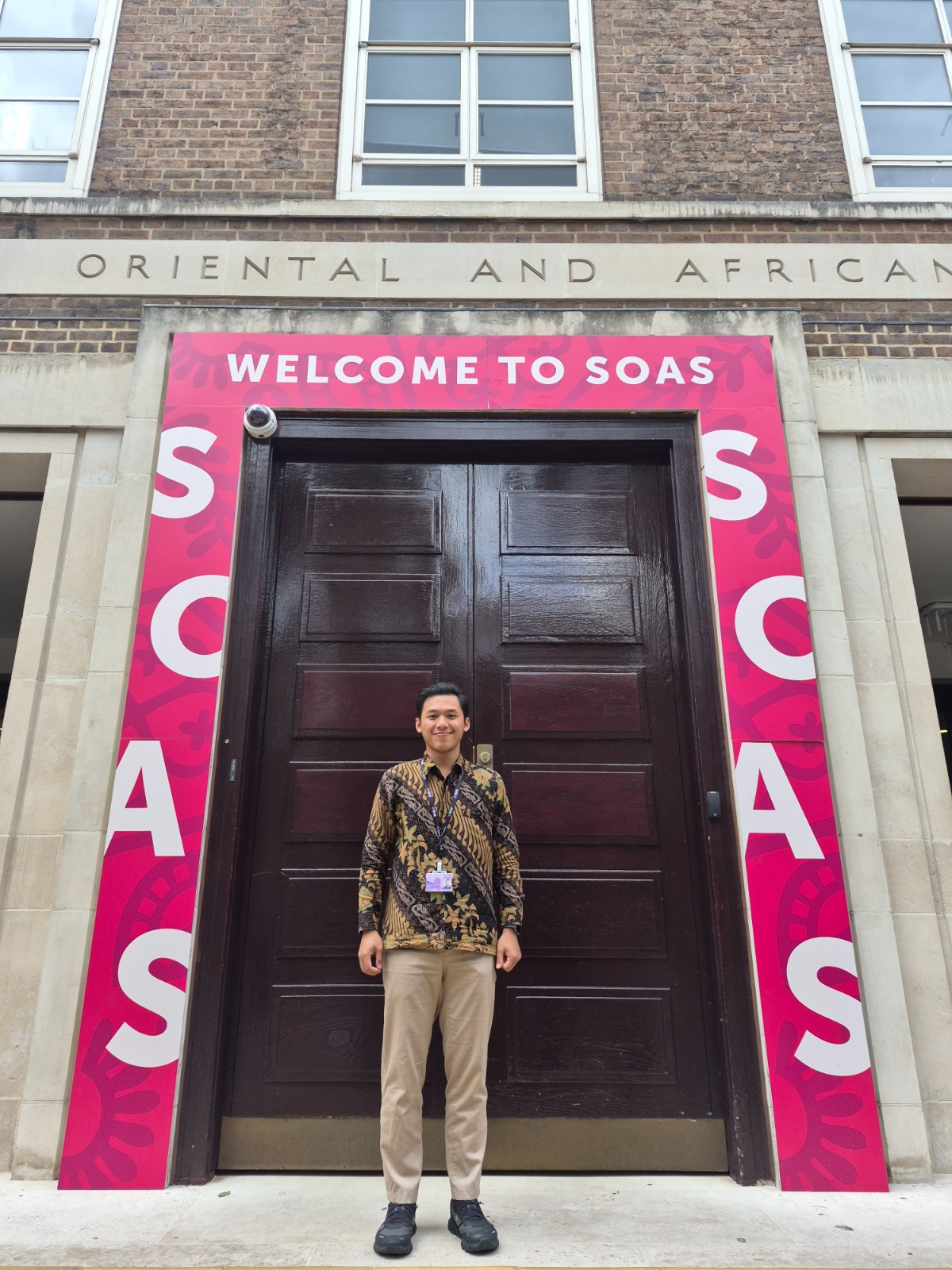
None of this happened according to a plan I set out in July. A running group I joined on a whim became my first real social circle here. A theft I never saw coming taught me more about resilience than any orientation session could have. A course I expected to be about English turned into training for the research ahead of me, and a conference I attended out of curiosity put me face to face with a scholar whose textbook I'd relied on for years. Looking back, it's the unplanned parts of these two months that shaped me the most.
I'm grateful to the Arryman Scholarship and ISRSF for making this chapter possible, and to everyone here, old friends and new, who helped London start to feel like somewhere I belong. The degree begins now, and I couldn't ask for a steadier place to start it from.
London, September 2026
Muhammad Faishal Akbar Dwiputra
Arryman Scholar 2026, SOAS University of London
08 October 2026

27 October 2025
24 October 2025

09 October 2025
07 August 2025